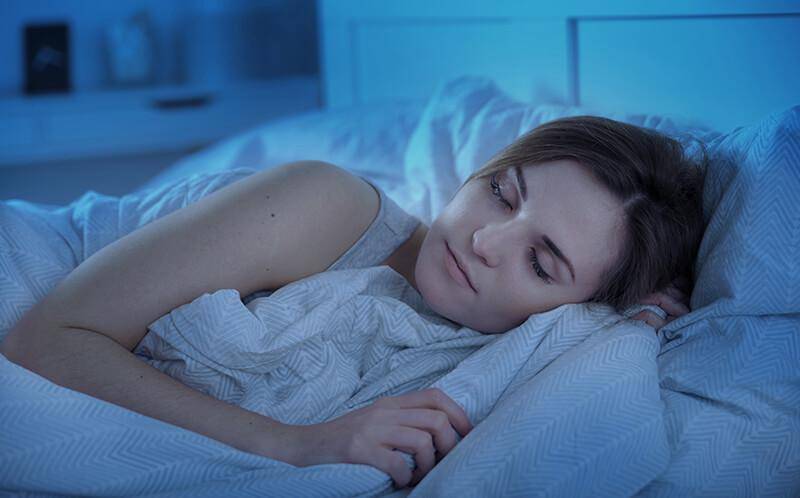
Sleep has always been something mysterious to humans. After all, we spend about a third of each day unconscious and don’t really know what exactly happens during that time. However, sleep research provides important insights to better understand how our sleep works—and why it is so important for us.
What is a Sleep Cycle?
At night, we usually go through four to six approximately 90-minute sleep cycles, characterized by a distinctive sequence of different sleep phases, illustrated in the diagram below. In between, we wake up on average about 28 times during the night but usually don’t remember it the next morning because the waking phases last only a few minutes. But what exactly happens in my body during the individual phases of the sleep cycle?
Preparation Phase
In this phase, our body slowly winds down and prepares for the night. In the retina of our eyes, there are light-sensitive cells that send a signal to the brain at the onset of darkness. In response, the pineal gland in the brain releases the body's own sleep hormone melatonin, and a complex chain reaction involving various nutrients and neurotransmitters is triggered.
The preparation phase can be used to read a book or do relaxation exercises before going to bed. On the other hand, heavy meals and physical exertion should be avoided about two hours before bedtime, as they activate the body again. Also, blue light from screens and smartphones disrupts the signal-forming function of the retina and can make falling asleep more difficult. However, a blue light filter can often be activated at certain times to eliminate this effect.
Falling Asleep Phase
To help us fall asleep, the rising melatonin level relaxes the muscles and reduces reaction ability as well as mental agility. As soon as you close your eyes, the brain waves slow down and the brain areas relax.
During the falling asleep phase, strange thoughts often occur, which are linked more associatively than logically. This is because the thalamus, the gatekeeper of our consciousness that decides which signals are passed on to the cerebral cortex, shuts down about nine minutes earlier than the cerebral cortex. With slow rolling eye movements, we finally fall from the drowsy state into sleep.
Deep sleep phase
Now blood pressure falls, muscles relax, breathing and heartbeat slow down. At the same time, brain activity decreases and a clearing out and reorganization takes place. During the day, the brain must react quickly and absorbs many pieces of information like a sponge into the hippocampus, the brain’s temporary storage. Many synapses between brain cells form, which are unnecessary. According to the prevailing theory, these are dissolved again by delta waves to make room for new information. The cerebral cortex, where our long-term memory resides, then signals the hippocampus its capacity. This reactivates and reflects on the fresh memories of the day and stores important information in the cerebral cortex.
Dream phase (REM sleep)
This sleep phase is characterized by rapid back-and-forth eye movements, which is why it is also called the REM phase (Rapid Eye Movement). It is initiated by electrical impulses from the brainstem and by the release of the neurotransmitter acetylcholine.
Here, parts of the cerebral cortex awaken and the brain becomes as active as during the day. While the large muscle groups remain completely relaxed, blood pressure, heart rate, and breathing rate increase. In the brain, the logical-analytical areas remain inactive, while the visual and emotional areas take command. The brain begins to dream – an average of four dreams per night.
Some researchers believe that after the reorganization of factual memory during deep sleep, the dream phase serves to emotionally process the experiences of the day. REM sleep is also essential for learning processes.
Waking phase
As the stimulating stress hormone cortisol continues to rise throughout the night, the proportion of REM sleep compared to deep sleep increases more and more. Eventually, the brain begins to wake up. But unlike falling asleep, the cerebral cortex and thalamus wake up together. Since this process can take up to 20 minutes, it is still difficult for us to concentrate and react quickly immediately after waking up.
The anterior cingulate, the area just behind the frontal lobe, wakes up immediately. Since this area is responsible for self-awareness, we consciously perceive ourselves as groggy in the first few minutes after waking up.
How do I recover during a sleep cycle?
The deep sleep phase is the most important phase for our recovery in the cycle. Several deep sleep phases occur during a night, which tend to get shorter over time, while the REM phases get longer. The first sleep cycles are therefore the most restorative. This also means that even if we get less sleep once in a while, we still sleep relatively restfully. So it’s no big deal if we go to bed late or have to get up unusually early – the body makes the best of it!
How can I use knowledge about my sleep cycle?
In the long term, of course, we should still aim to maintain a normal amount of four to six sleep cycles. How much sleep each person exactly needs, whether they are an early bird or a night owl, and which sleep rhythm develops is very individual and varies from person to person. However, some universally valid tips and tricks can always be followed. Here you will find 10 tips for better sleep.
The renowned sleep expert Nick Littlehales has developed a special program that specifically uses knowledge about the 90-minute human sleep cycle to promote healthy sleep and optimal recovery. In his book »SLEEP – Sleep Like the Pros«, he presents his R90 technique, based on a stable rhythm with fixed sleep cycles. In our video series #NickOnSleep, he also explains the key aspects of his approach.
About Third of Life
Third of Life is backed by sleep experts with many years of experience who want to help you sleep better. In close collaboration with sleep researchers and based on studies from science and practice, we develop functional sleep products, from nightwear to pillows and duvets to mattress protectors, to improve the special third of our lives: sleep. In our magazine, we also provide helpful tips and recommendations for restful nights.
More on the topic:

Herbal Sleep Aids - Naturally Sleep Better
#NickOnSleep: Cristiano Ronaldo and the 90-Minute Sleep