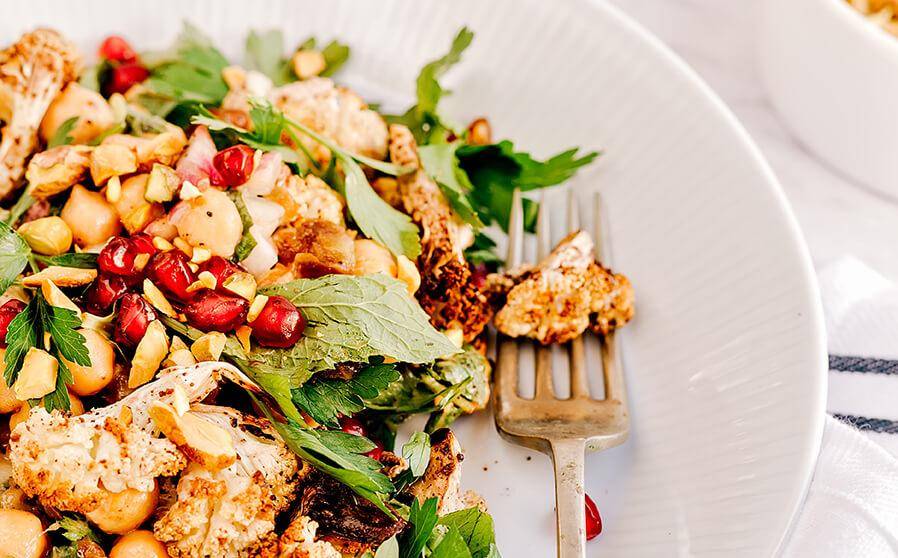
Dinner should take place at least three to four hours before going to bed, as the body completes the main digestive processes during this time. Those who eat too heavily and too late either have trouble falling asleep or sleep more restlessly because the digestive tract is still working at full speed. But those who eat too little can also disturb their sleep due to hunger pangs at night! Plan accordingly so you can find rest at night!
Dinner should be a lightly seasoned and easily digestible meal.
-
Too spicy food can lead to reflux, coughing, or gas.
By the way: Those who suffer from heartburn (reflux) should sleep on their left side. The stomach then lies lower than the esophagus, preventing stomach acid from flowing back into the esophagus. Try it—you’ll immediately feel the difference! - Too salty food can cause you to wake up thirsty at night.
- Too fatty food is hard to digest and keeps the digestive tract active for longer.
- Even healthy foods can be hard to digest. For example, raw vegetables should only be eaten until the afternoon.
- Those who indulge in highly sugary desserts in the evening cause their blood sugar levels to rise quickly and sharply. The same applies to soda and juices. All of this energizes us at a time when we should be winding down.
But don’t worry! There are also foods and nutrients that promote and improve sleep.
Especially beneficial for sleep is the amino acid tryptophan, which is found in turkey meat, nuts, bananas, eggs, and milk. Tryptophan is converted into the sleep-promoting neurotransmitter serotonin. This process can even be accelerated by the hormone insulin. Therefore, a small amount of short-chain carbohydrates is very suitable in combination with tryptophan. Ideal snacks for a restful sleep include:
- a small bowl of muesli with milk,
- a glass of milk with honey or
- a proper bite of the Thanksgiving roast ;-)
The minerals magnesium and calcium naturally have a relaxing effect and thus help with falling asleep.
- Magnesium is found in high concentrations in the following foods: whole grain products, mineral water, liver, poultry, fish, pumpkin and sunflower seeds, nuts, potatoes, spinach, kohlrabi, berries, bananas, and dairy products.
- Calcium can be found in seeds, dairy products, vegetables (especially cabbage, nettle, arugula, broccoli), as well as in whole grain products, mineral water, bananas, and figs.
The various B vitamins are equally important for sleep:
- Vitamin B1: too little of it can cause serotonin deficiency in the brain and thus impair sleep quality.
- Vitamin B3 (niacin) is important for the nervous system, speeds up falling asleep, and can improve sleep quality.
- Vitamin B5 (pantothenic acid) is essential for nerve impulse transmission and therefore important for your sleep rhythm.
- Vitamin B6 is responsible for converting carbohydrates and proteins into glucose. It regulates maintaining a normal blood sugar level at night and thus prevents premature awakening.
The amino acid GABA also promotes sleep and plays an important role especially in the falling asleep phase. However, it can hardly cross the blood-brain barrier, so direct intake does not do much for better sleep.
Therefore, it is rather recommended to take the amino acid glutamine. It is converted into GABA in the brain via glutamate and thus promotes better sleep. So feel free to enjoy cheese, eggs, quark, or nuts with a clear conscience!
What should you consider for a nighttime snack?
Night snacks containing these nutrients should be taken about one hour before bedtime. They are especially recommended,
- when longer nights of 9 hours or more are planned for recovery reasons,
- when energy needs are increased due to intense training or work and/or
- when there are more than 3-4 hours between dinner and bedtime.





The ideal room climate for the bedroom
#NickOnSleep: The Sleep Revolution - Sleeping in 90-Minute Cycles
1 comment
Hallo,
Heeft u financiële hulp nodig met een lage rente van 2%? Wij bieden diverse leenopties, waaronder projectleningen, kortlopende en langlopende leningen, persoonlijke leningen, investeringsleningen, zakelijke leningen, studieleningen en hypotheekleningen.
Onze diensten zijn 100% legaal, veilig, betrouwbaar en degelijk. Wilt u meer weten? Stuur dan een e-mail naar zachm5335@gmail.com.
Met vriendelijke groet,
Ivan Marko