
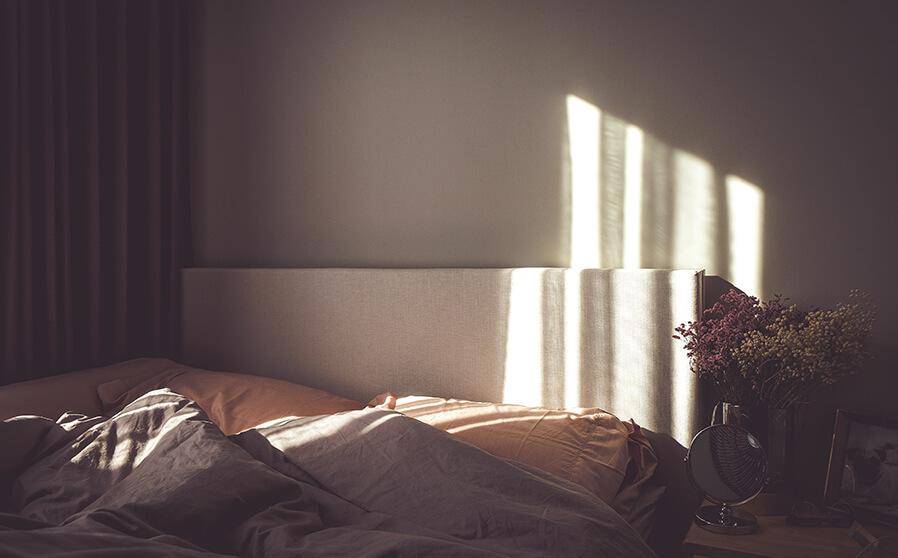
How can you design your bedroom to create an ideal indoor climate? We have summarized the most important points for you.
Light
Ideally, the bedroom should face south to get more sun in winter and less in summer. Additionally, you should have the option to darken the room almost completely.
Fresh Air:
A 10-minute burst of ventilation in the evening before going to bed and in the morning after waking up is enough to completely exchange the air in the room, allowing moisture to be vented outside. If the room is large enough, you can manage without a tilted or open window at night. An open window can cause cooling due to drafts and let in too much moisture.
Temperature
The ideal temperature for restful sleep is between 16 and 18 degrees Celsius. If you find this too cold, you might want to use a slightly warmer blanket or nightwear. In summer, it can be difficult to reach this temperature in the bedroom without air conditioning. What can definitely help here are thermal films on the windows to keep the room as cool as possible.
Humidity
The relative humidity should be between 45 and 60%. If it’s drier, the mucous membranes become vulnerable to pathogens. If it’s more humid, there is a risk of mold growth and the body struggles significantly more with thermoregulation.
Noise
Nighttime noise can be a real sleep killer. Therefore, ensure the sleep environment is as quiet as possible, so avoid choosing a room facing the main street as the bedroom.
Focus
The bedroom should be used only for sleeping and sex, so banish all electronic devices. In particular, watching TV and working in the bedroom are taboo.



How to: A Good Nap for Refreshing Breaks
How Does My Dinner Affect Sleep?