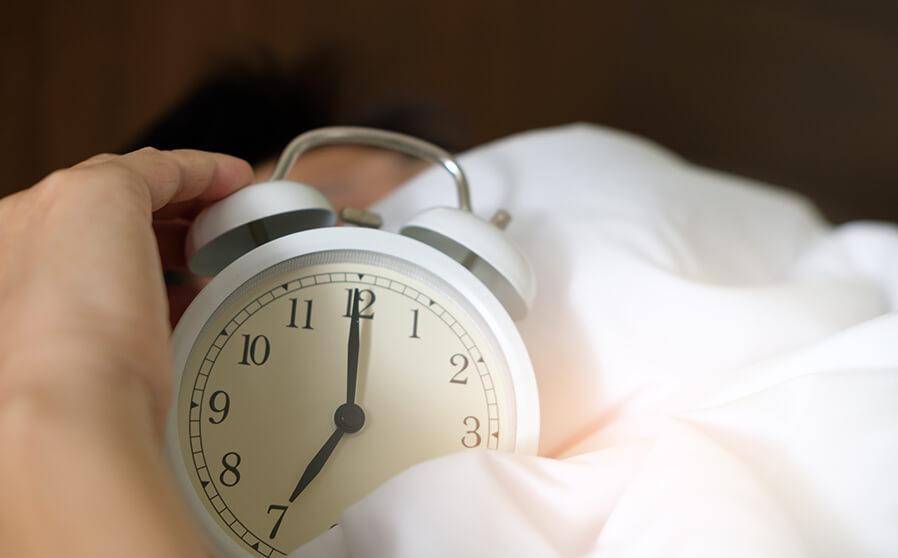
The time change is just around the corner. On the last weekend in March, the clocks will be set back from 3 a.m. to 2 a.m. on the night from Saturday to Sunday. Have you noticed in the past that you feel more tired and sluggish after the time change and that your schedule gets disrupted? Why is the one-hour time change so difficult for our body?
The time change affects our biorhythm.
The time change disrupts the body’s sensitive biorhythm, which can make us feel sluggish for several days. The body typically needs up to two weeks to adjust to this change.
When a different schedule is forced, the changed times for falling asleep and waking up can cause a disrupted sleep rhythm and affect sleep quality. Going to bed an hour earlier or waking up an hour earlier can be harder for you because your body is used to your internal clock and a fixed schedule. This can be a particular challenge for people with a typical daily routine.
But people who already suffer from sleep disorders can be especially affected. Among other things, this can lead to reduced performance, concentration, and memory, but serious illnesses can also develop or worsen due to sleep deprivation.
But don’t worry, we’ll explain how to minimize the effects of the time change on your sleep and body!
So how can you better prepare for the switch to standard time?
To minimize the effects of the time change, you should try to adjust your sleep rhythm accordingly. To adapt the change to your weekly routine, you can try going to bed one hour earlier than usual on the day of the time change and getting up at your usual time on Sunday morning. That means if you go to bed at 10 p.m. and get up at 7 a.m. from Monday to Friday, you should go to bed at 9 p.m. on the day of the time change and get up at 6 a.m. (new time) the next morning. On the evening after the time change, you should now try to fall asleep again at your usual time (10 p.m., new time).
If you feel like you can't fall asleep, the following tips can help:
- Take time to unwind before going to bed.
- Treat yourself to a warm bath, a cup of caffeine-free tea, or read a relaxing book.
- Yoga can lead to pleasant, holistic relaxation and prepare you for sleep through mindful movements and conscious breathing.
- Avoid electronic devices before going to bed, as the blue light can inhibit the production of the sleep hormone melatonin.
The natural sleep hormone melatonin makes you tired and sleepy and helps you fall asleep. You can take melatonin in the form of tablets or sprays if you have trouble falling asleep. The melatonin chewable tablets from Third of Life can be easily sucked or chewed about 30 minutes before bedtime, so you can start the next morning well-rested and without tiredness – for more performance during the day.
Essential oils can make falling asleep easier. A pleasant and calming aroma, like lavender or chamomile, promotes relaxation, helps you fall asleep faster, and creates a restful, peaceful night. The ingredients of the SPRAY²Dream aroma sprays from Third of Life consist of genuine, pure essential oils that calm body and mind. Simply spray the spray directly on your pillow or in your room before going to bed.
It's best to give yourself some rest before and after the time change and rAvoid caffeine and alcohol to make it as easy as possible for you to fall asleep.
In addition, sunlight and some exercise can help thatsleep quality is improved. However, make sure not to exercise too late before going to bed, as this can negatively affect your sleep.
In our magazine, you can find even more sleep tips and relaxation exercises for falling asleep to help you fall asleep even more easily after the time change.
About Third of Life
Third of Life is backed by sleep experts with many years of experience who want to help you sleep better. In close collaboration with sleep researchers and based on studies from science and practice, we develop functional sleep products, from nightwear to pillows and duvets to mattress protectors, to improve the special third of our lives: sleep. In our magazine, we also provide helpful tips and recommendations for restful nights.
More on the topic:

How Many Hours of Sleep Does My Child Need?
Third of Life receives the Innovation Award for Ergonomics 2022