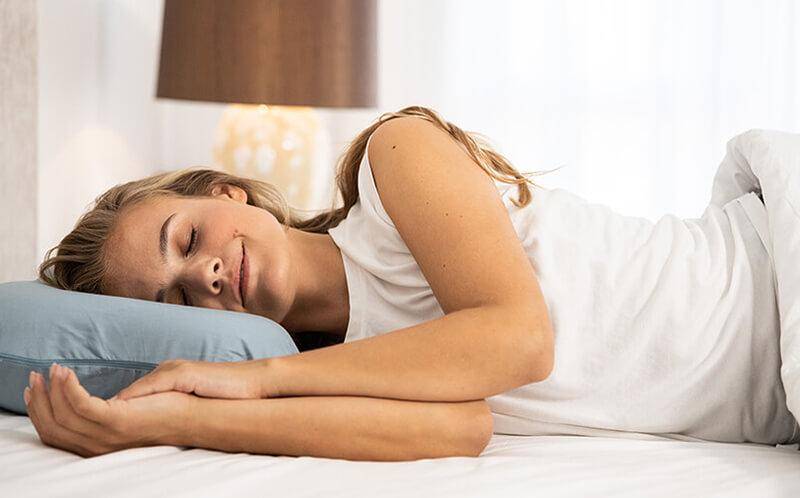
We spend an average of eight hours sleeping every night. Each of us has a preferred sleeping position. Although even quiet sleepers turn and toss more than 26 times per night, they spend most of the sleep time in a certain position. Studies have found that 95 percent of people who choose their sleeping position once continue to use it. This means that in one year, you spend about three to four months in your favorite position.
Roughly, a distinction can be made between side position, back position, and stomach position. But which is the best? Unfortunately, this cannot be answered universally. Below, we want to give you some information about the advantages and disadvantages of each sleeping position. You will also find some easy-to-apply tips to optimize your personal favorite position.
Back position: Relieves the back and prevents wrinkles
The back position is often called the best sleeping position. About seven percent of all people sleep in this position. When you sleep on your back, your head, neck, and spine are in a natural alignment, and the body's pressure is distributed evenly. The American Academy of Dermatology (AAD) recommends this sleeping position to prevent sleep lines. When your face is pressed against a pillow, as in all other sleeping positions, pressure on the skin causes sleep lines that can deepen over time.
One disadvantage for back sleepers is that this position promotes snoring. According to a study, 54 percent of snorers are "positional snorers." That means they only snore when sleeping on their back. Changing the sleeping position to the side can therefore stop or at least reduce snoring for many.
Side sleepers should consider the following points when choosing a pillow:
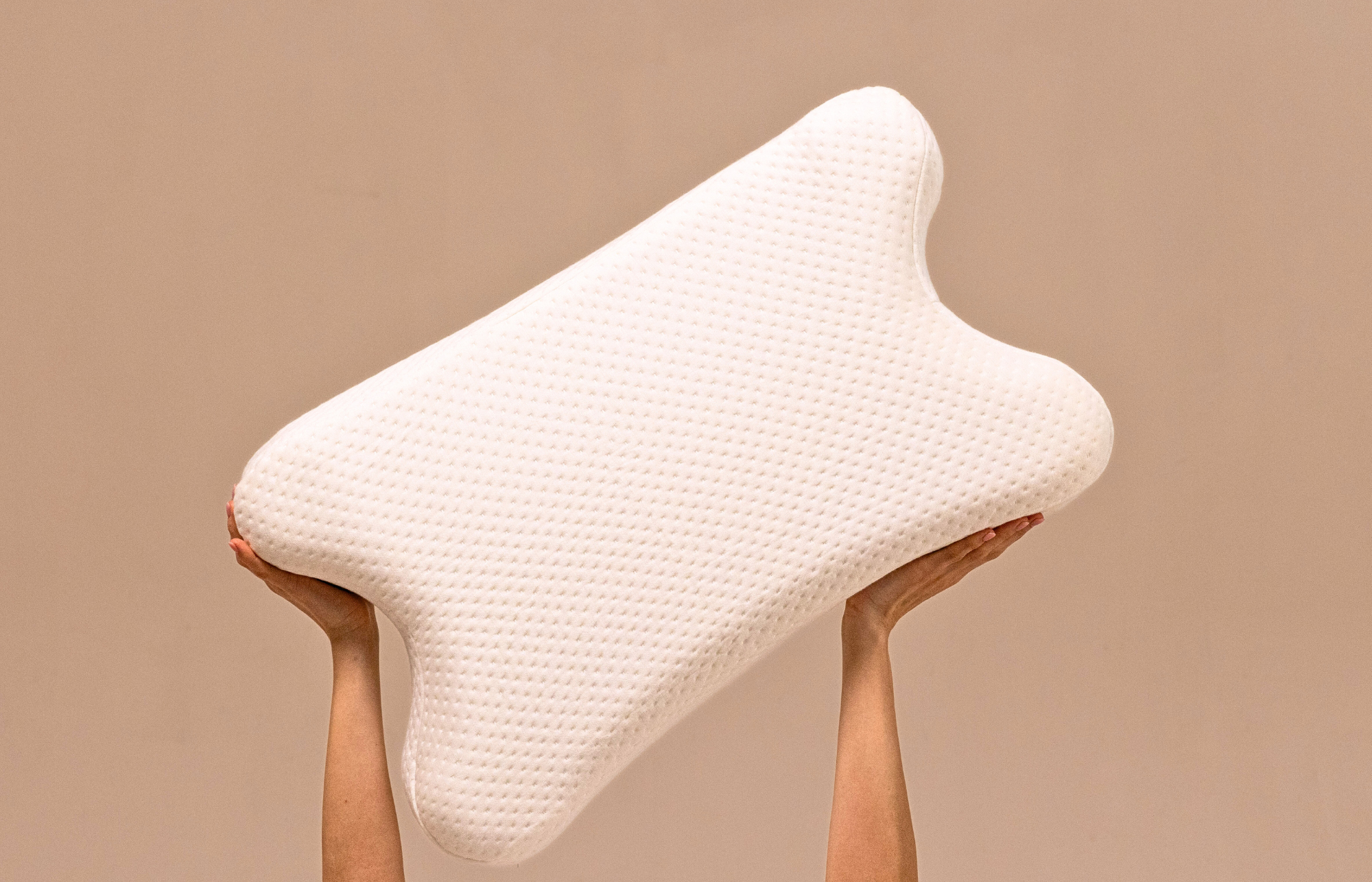
- The head and neck curve should be ideally supported and maintain the natural curve of the spine. Pre-shaped ergonomic pillows are especially suitable for this.
- However, a pillow that is too high should be avoided because this unnaturally raises the head, which can lead to tension and shallower breathing.
- For particularly firm mattresses, a higher pillow can also be chosen.
Side sleeping: Positive for back and digestion – but not for the vain
About 68 percent of people sleep on their side – 38 percent on the right and 30 percent on the left side. If mattress and pillow are chosen correctly, the spine is in a neutral position for side sleepers. This relieves the back optimally and allows the intervertebral discs to relax from the day's strain. Ideally, we are then two to three centimeters taller the next morning because the intervertebral discs absorb lost fluid at night in a relaxed state.
Sleeping on the left side prevents stomach acid from flowing back into the esophagus because the stomach lies lower than the esophagus in this position. This can prevent stomach upset, reflux, and heartburn.
The only downside for the vain side sleepers among us: As mentioned above, sleeping on your side can lead to wrinkles on the face. Our tip therefore: Choose a pillow that can elastically adapt to the shape of your head to reduce wrinkle formation.
Side sleepers should consider the following points when choosing a pillow:
- The pillow should fill the shoulder-neck triangle to prevent overextension of the cervical spine.
- Side sleepers with broad shoulders need higher pillows (more than 11 cm in height)
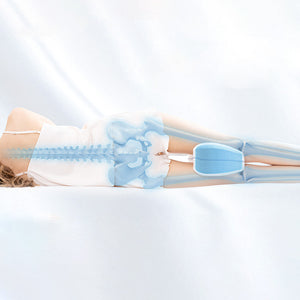
- An additional pillow or part of the blanket between the knees also relieves the lower back area.
- The mattress should be chosen and the slatted frame adjusted so that the shoulders and hips sink into the mattress enough for the spine to remain completely straight.
You can check whether the spine is actually straight, for example, together with your partner. Lie down in your sleeping position with your back exposed and feel each vertebra to check if they are all aligned. If you want to be precise, you can even mark the vertebrae with a water-soluble pen to make the alignment more visible.
© VadimGuzhva – Fotolia.com
A few people also sleep in the so-called fetal position—a special type of side position characterized by a pronounced curvature of the back. While this can temporarily relieve pressure on the spine, it is not recommended over a longer period due to shoulder and neck tension.
Stomach position: Good for reducing snoring, but stressful for the neck and spine
Approximately 17 percent of the population sleeps on their stomach. However, as sleep experts, we do not recommend this position because the spine usually does not maintain a natural alignment when lying on the stomach, and there is a risk of developing a swayback. Additionally, the neck is in a physiologically unnatural position due to turning the head to one side. Tension in the neck and back pain are common consequences. Sleeping on the stomach also increases the pressure on the teeth because the lower jaw is pushed forward more than usual, and breathing becomes shallower in this position as the weight presses on the lungs.
However, sleeping on your stomach is a good position to stop snoring. While lying on your back often promotes snoring due to the tongue base falling back, stomach sleeping can usually reduce snoring sounds or even make them disappear completely.
These points should be considered by stomach sleepers when choosing a pillow:
- No soft mattresses, as these promote hollow back formation and thus damage vertebrae and discs.
- No high pillows, as they cause hyperextension of the cervical spine, which can result in shoulder tension and neck problems. Therefore, it’s better to choose low pillows with a height of 10 cm or less.
What can I do if my sleeping position is not optimal?
If you have now noticed that your current sleeping position is not ideal for you and you want to change it, one thing is important: Give yourself plenty of time to adjust! Try to fall asleep step by step in the new position, but don’t stress if you often wake up in your usual position. The adjustment will certainly take some time. A good first step to changing your sleeping position is to get an ergonomic pillow suitable for the new desired sleeping position.
Want to learn more about choosing the right pillow? Our founder Hanno explains in the following video how to find the ideal solution for your sleeping position.
About Third of Life
Third of Life is backed by sleep experts with many years of experience who want to help you sleep better. In close collaboration with sleep researchers and based on studies from science and practice, we develop functional sleep products, from nightwear to pillows and duvets to mattress protectors, to improve the special third of our lives: sleep. In our magazine, we also provide helpful tips and recommendations for restful nights.
The 10 Best Sleep Tips – How Can I Sleep Better?
How to: A Good Nap for Refreshing Breaks