
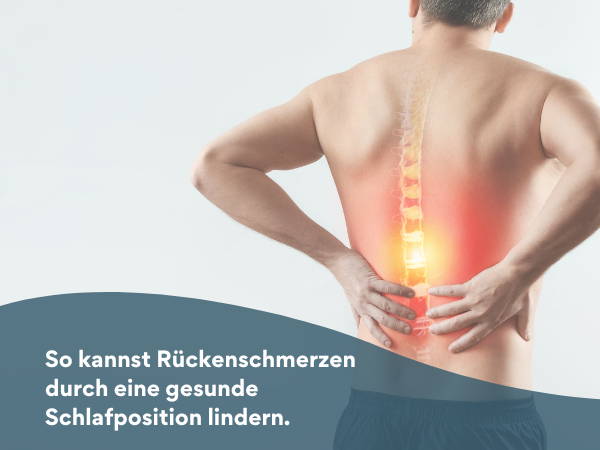
Back pain is a common problem affecting many people. It is often caused by poor posture or too little exercise. But the choice of mattress, slatted frame, and pillow can also play a role. After all, we spend a large part of our lives sleeping. A healthy sleep ergonomics can therefore help prevent back pain and promote restful sleep. In this guide, you will learn how your sleeping position affects your back health, how to design your sleeping environment ergonomically, and what measures you can take to support a healthy spine.
1. Back pain caused by the wrong sleeping environment
Back pain can have many causes such as poor posture, lack of exercise, overweight, and stress, but also one-sided strain at work or in daily life as well as injuries or illnesses. However, one of the most common causes is an incorrect position in bed. After all, we sleep for almost a third of our lives, and if we are poorly supported during this time, it can lead to excessive strain on the spine and back pain. An improper sleeping environment can therefore have long-term effects on our back health. If the body sleeps in an unhealthy posture for an extended period, it can lead to chronic pain and even spinal problems.
2. What significance does your sleeping position have on your back health?
Stomach position: This sleeping position is the least suitable for the back as it leads to unnatural curvature of the spine. If you still prefer sleeping on your stomach, you should use a flat pillow or a special stomach sleeper pillow and choose a firm mattress.
Back position: This sleeping position is best for the back as it allows a natural alignment of the spine. However, you should still opt for a firm mattress and a lower pillow to avoid unnatural curvature.
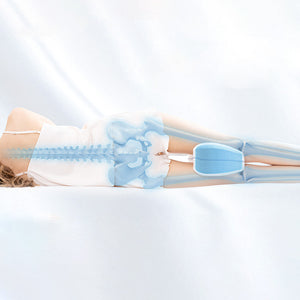
Side position: This sleeping position is also good for the back, as it promotes a natural alignment of the spine. Especially important here is a suitable pillow with a shoulder cutout to avoid neck and shoulder tension. It is also best to use a pillow between the knees so that the spine and hips remain in a natural position.
3. How can you design your sleeping environment to be "ergonomic"?
An ergonomic design of the sleeping area can help prevent back pain and promote restful sleep. But what does "ergonomic" actually mean? Essentially, it means that the mattress, slatted frame, and pillow are designed to adapt to the individual body contour and thus support a natural position of the spine.
Choosing the right mattress
Choosing the right mattress is crucial for healthy sleep ergonomics. There is no universal recommendation for the best mattress, as everyone has individual needs and preferences. However, the basic rule is that the mattress should be neither too hard nor too soft. A mattress that is too soft can cause the spine to be positioned unnaturally, leading to pain. On the other hand, a mattress that is too hard can cause uncomfortable pressure on the spine.
An ergonomic topper made of visco foam can also help support the back and thus prevent back pain. A topper is placed on the existing mattress and ensures that the body adapts optimally to the lying surface. Especially with older mattresses that no longer provide sufficient support, a topper can be a good solution. The visco foam adapts precisely to the body, relieving the spine and avoiding pressure points. In addition, a visco foam topper can provide comfortable support at different sleeping temperatures, as it absorbs body heat and thus ensures a pleasant sleeping climate. In combination with an ergonomic mattress and a suitable pillow, a visco foam topper can thus help to adopt a healthy sleeping position and prevent back pain.
The right pillow for your head
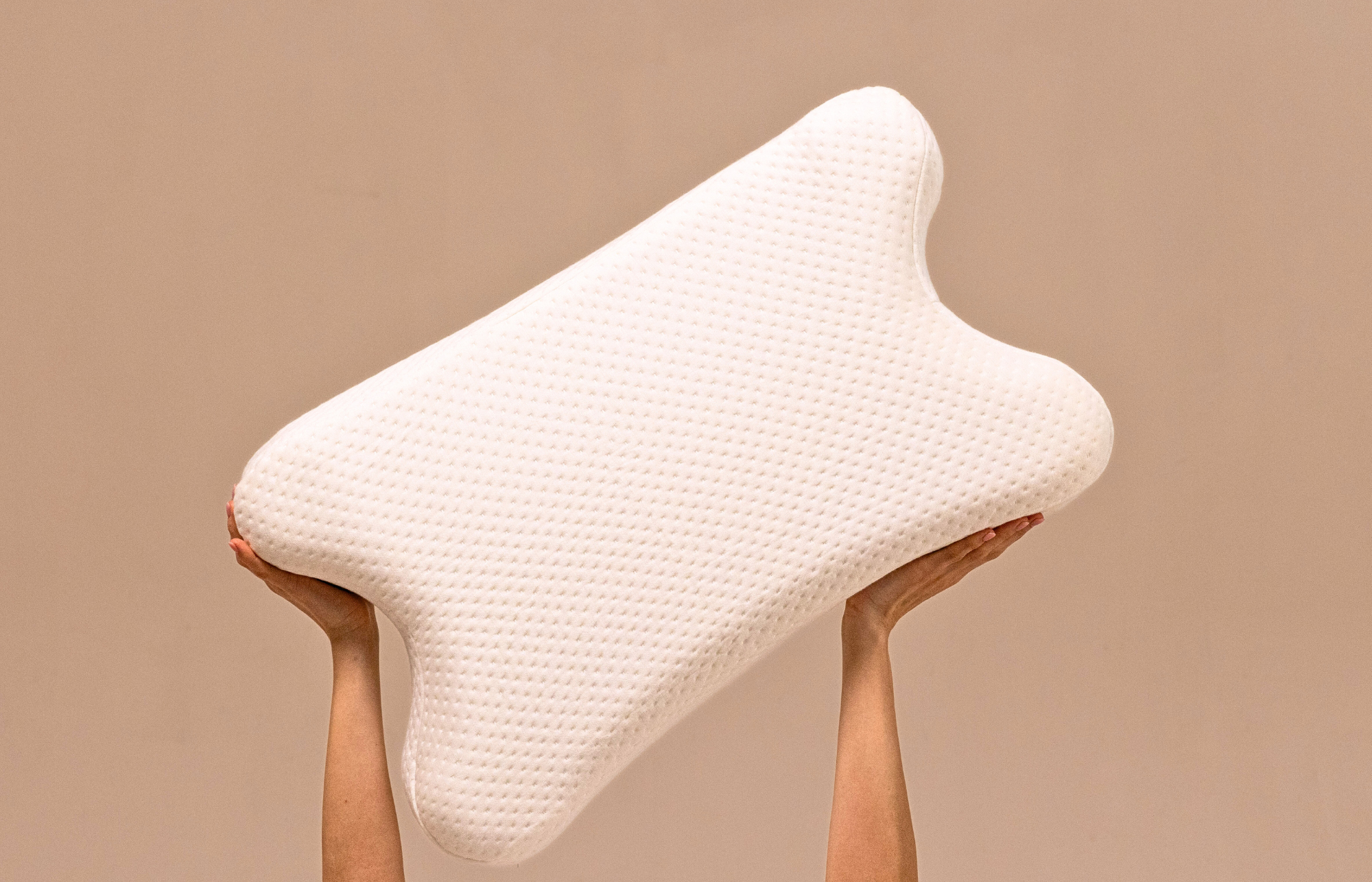
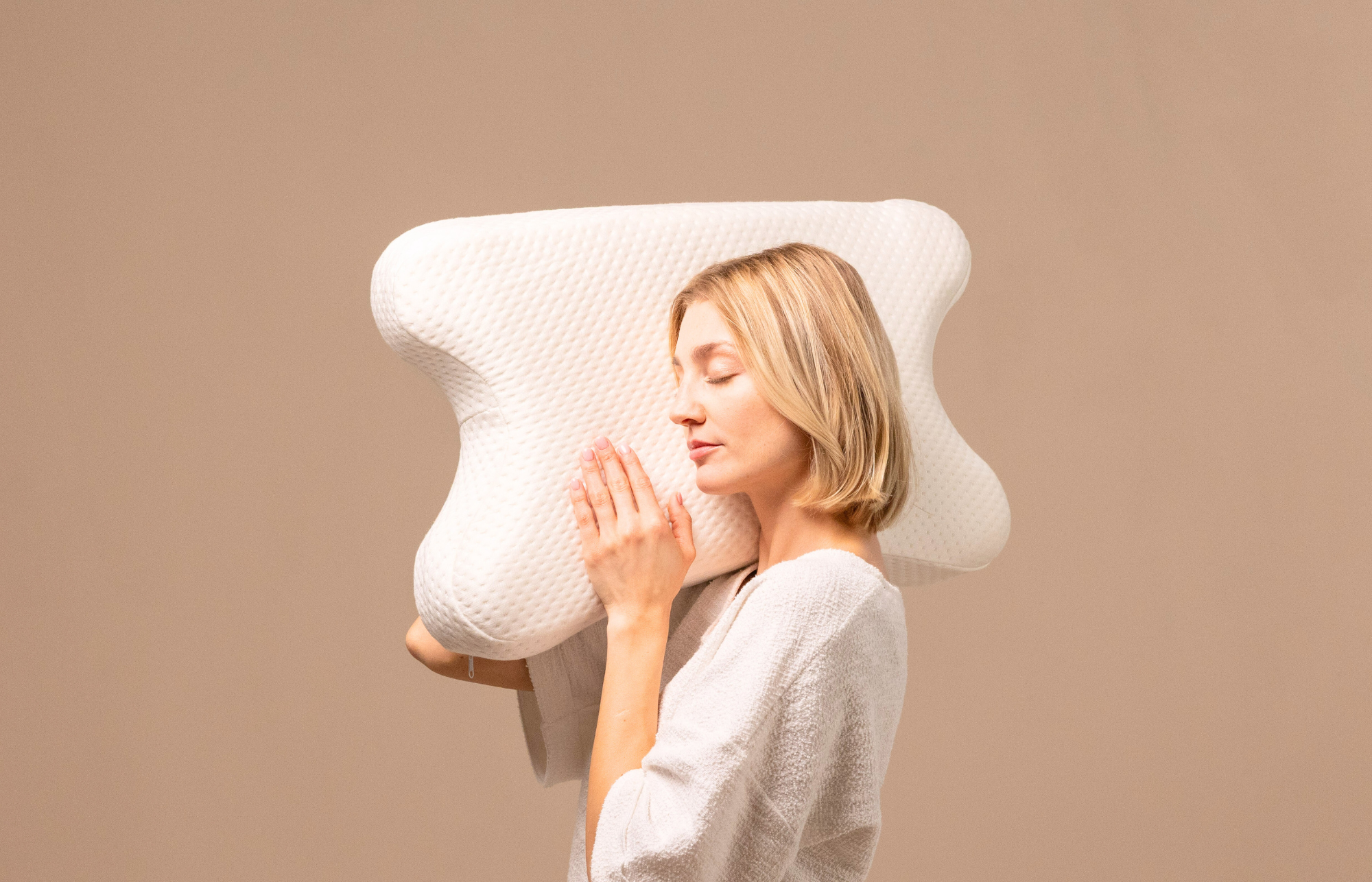
A pillow should support the neck and thus help keep the spine in a natural position. However, a pillow that is too flat or too high can cause the neck to be overextended or bent, which can lead to pain. It is also advisable to try different pillows to find the ideal one for you. With the help of the pillow advisor, you can find the right pillow for yourself.
Never again without a Third of Life pillow!
"I used to wake up very often with back pain and tension and had trouble finding a comfortable sleeping position. My old pillow was not very supportive and I felt it didn’t match my mattress.
With the help of the Third of Life pillow advisor, I discovered the NuMoon pillow for myself: I am a side sleeper and found this wonderful pillow made of ergonomic visco foam. The pillow has really improved my sleep quality and almost completely eliminated my pain. I would recommend it to anyone with similar problems."
- Beate Winter - Customer of Third of Life
4. Tips for improving back health in everyday life
In addition to sleep ergonomics, everyday ergonomics also play an important role. Ergonomic office chairs can help improve back health. These chairs are specifically designed to support a natural posture while sitting and reduce strain on the spine. They often feature adjustable seat height and backrest to allow individual customization for the user.
Regular exercise and stretching
Regular exercise and stretching can help improve back health and prevent back pain. Even short walks during work can help relieve the spine.
A Balanced Diet
A balanced diet can also help improve back health. Adequate intake of nutrients such as calcium, vitamin D, and magnesium can strengthen the bones and spine.
Avoiding unnecessary pressure on the back
It is important to avoid unnecessary pressure on the back, such as from heavy loads or incorrect lifting. An ergonomic workplace design can also help relieve the back.
Proper Lifting and Carrying
When lifting and carrying heavy objects, it is important to use the correct technique to avoid unnecessary strain on the back. This includes, for example, lifting with the legs instead of the back and carrying heavy loads close to the body.
Relaxation Techniques
Relaxation techniques such as yoga, Pilates, or meditation can help relax the body and relieve tension in the back area. Regular massages can also be helpful.
5. Conclusion
In summary, back health is an important topic that should be considered in everyday life. In particular, ergonomic measures can help relieve the back and prevent back pain. This is important not only at the workplace but also during sleep. Since we spend about one-third of our lives in bed, an ergonomic sleeping position can help keep the spine in a healthy posture and thus avoid back pain. Ergonomic pillows, toppers, and knee cushions can support positioning the body naturally. Additionally, regular exercise, a balanced diet, and avoiding unnecessary pressure on the back can also contribute to improving back health. By integrating these tips and tricks into daily life, you can help keep your back healthy in the long term.
About Third of Life
Third of Life is backed by sleep experts with many years of experience who want to help you sleep better. In close collaboration with sleep researchers and based on studies from science and practice, we develop functional sleep products, from nightwear to pillows and duvets to mattress protectors, to improve the special third of our lives: sleep. In our magazine, we also provide helpful tips and recommendations for restful nights.
More on the topic:
Causes and Tips for Night Sweats
The Best Tips for Falling Asleep - How Can I Fall Asleep Quickly?