
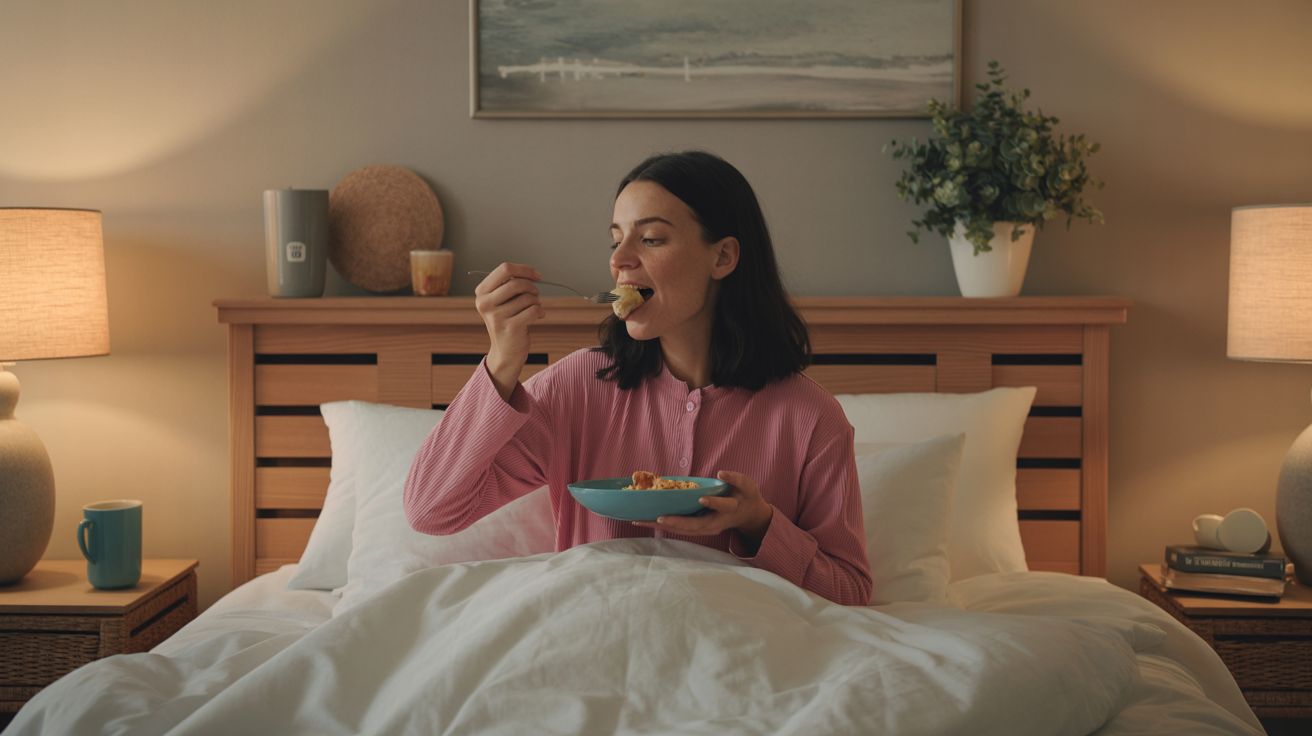

How does dinner affect your sleep?
The question of whether and how eating late affects sleep quality concerns many people. While some can eat a meal right before going to bed without problems, others suffer from trouble falling asleep and restless nights. Science shows: The timing and composition of the evening meal have a measurable impact on our sleep and nighttime recovery.
Common questions and issues
Does eating late really make you gain weight?
The widespread belief that calories consumed before bedtime are automatically stored as fat can be scientifically disproven by many studies. What matters is the total calorie intake throughout the day. The connection between eating at night and possible weight gain usually lies in the fact that late meals lead to an overall higher calorie intake or too many calories consumed.
Why do I sleep worse after eating late?
While the body is busy with digestion, it cannot fully relax. The connection between the gut and the brain prevents the brain from shutting down while the digestive system is active. Data analysis shows specifically: After late meals, people get on average 26 minutes less sleep and 3% less REM sleep. REM sleep means: Rapid Eye Movement – the time when you dream a lot.
Do late meals affect my recovery?
Recovery values drop by an average of 10% the day after a late meal. Also, late eating can disrupt the circadian rhythm, throwing the internal clock off balance.
The circadian rhythm is your internal clock that controls the sleep-wake cycle and other body functions like hormone production and body temperature.
What role does digestion play during sleep?
Our body limits many metabolic and organ functions at night, including stomach and intestinal activity.
Heavy and rich meals are harder to digest late at night, which can cause trouble falling and staying asleep.
Practical recommendations for more restful sleep
Meal timing
- Have your last meal at least 2-3 hours before bedtime
- No calorie intake after 8:30 PM
- Establish regular meal times to regulate the circadian rhythm
Sleep-promoting foods
- Dairy products (can promote sleep)
- Tryptophan-containing foods like bananas, figs, soybeans
- Sour cherries
Magnesium-rich foods:
Magnesium relaxes muscles and the nervous system, helping with falling asleep.
- Bananas
- Avocado & spinach
- Pumpkin seeds
- Nuts
Summary
Late eating disrupts sleep
Late meals reduce sleep by 26 min. & REM sleep by 3%.
Our tip: Last meal 2-3 hours before bedtime. Avoid high calories after 8:30 PM for better recovery.






How the Sleep Cycle Works - 5 Common Questions & Answers
Why We Sweat at Night (and What You Can Do About It)